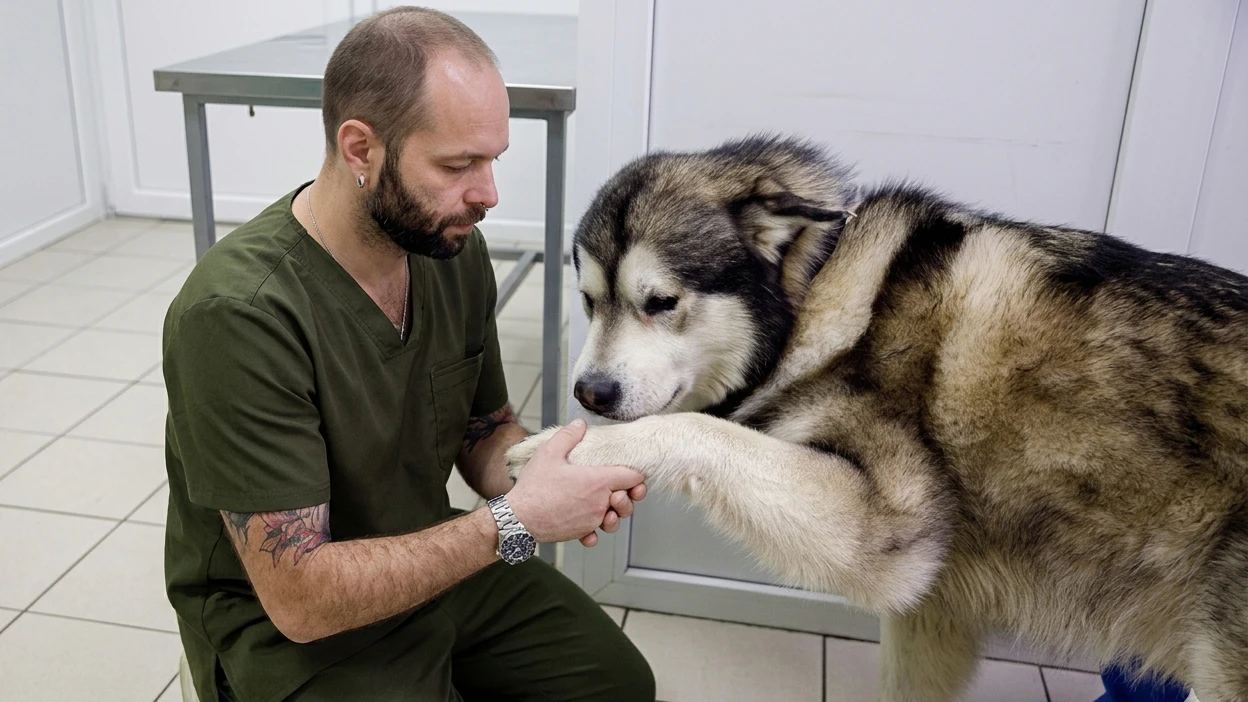
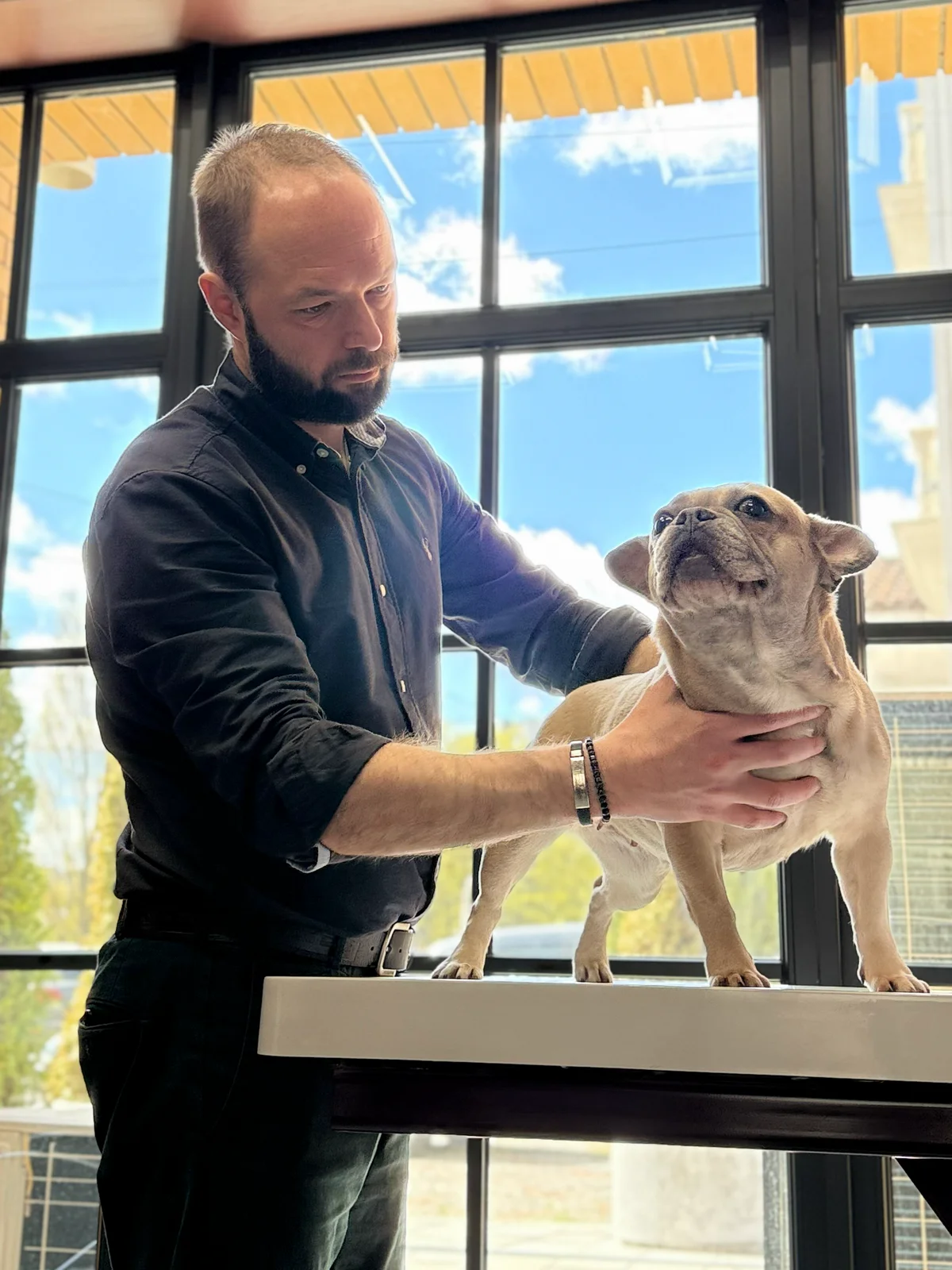
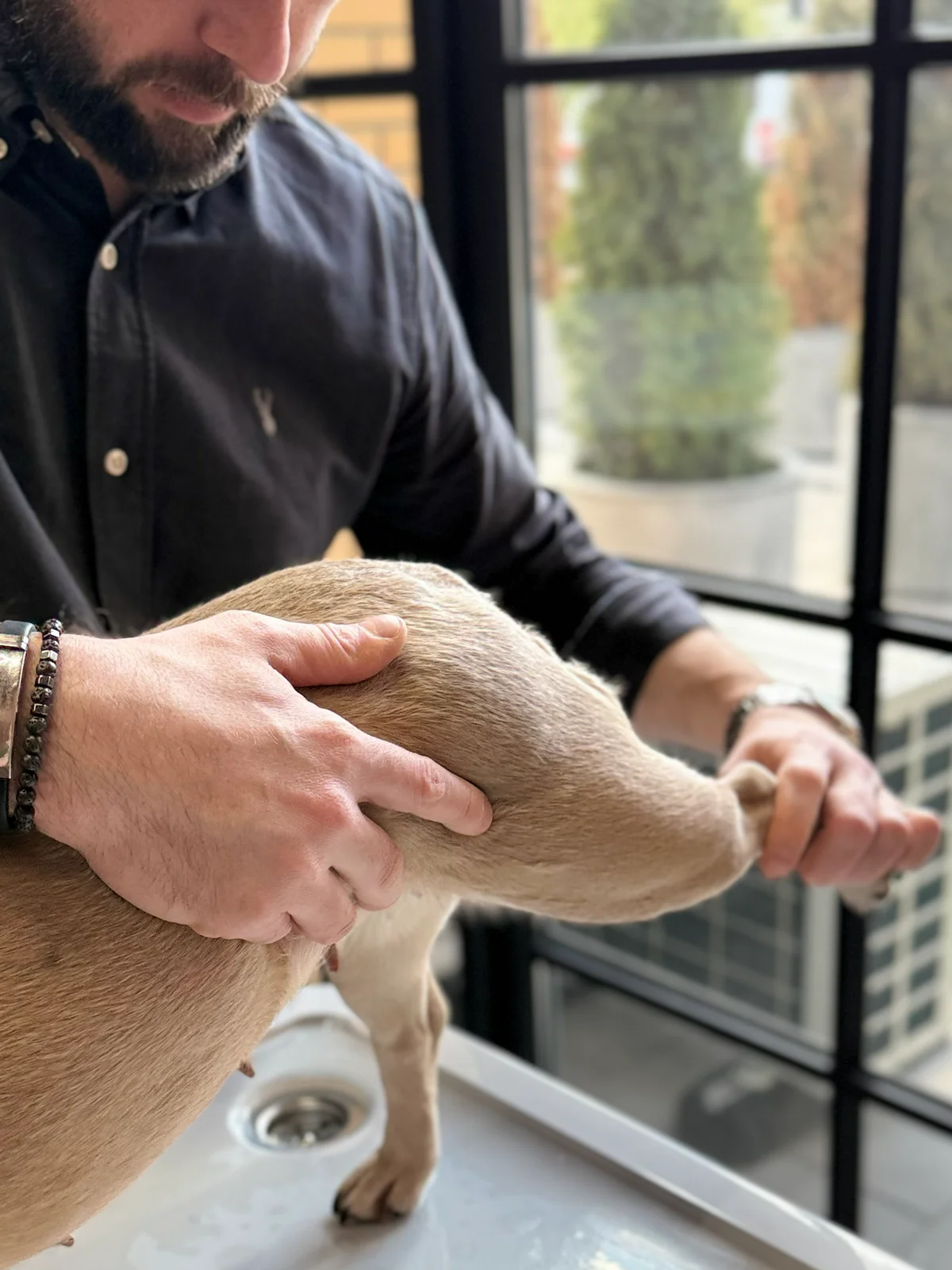
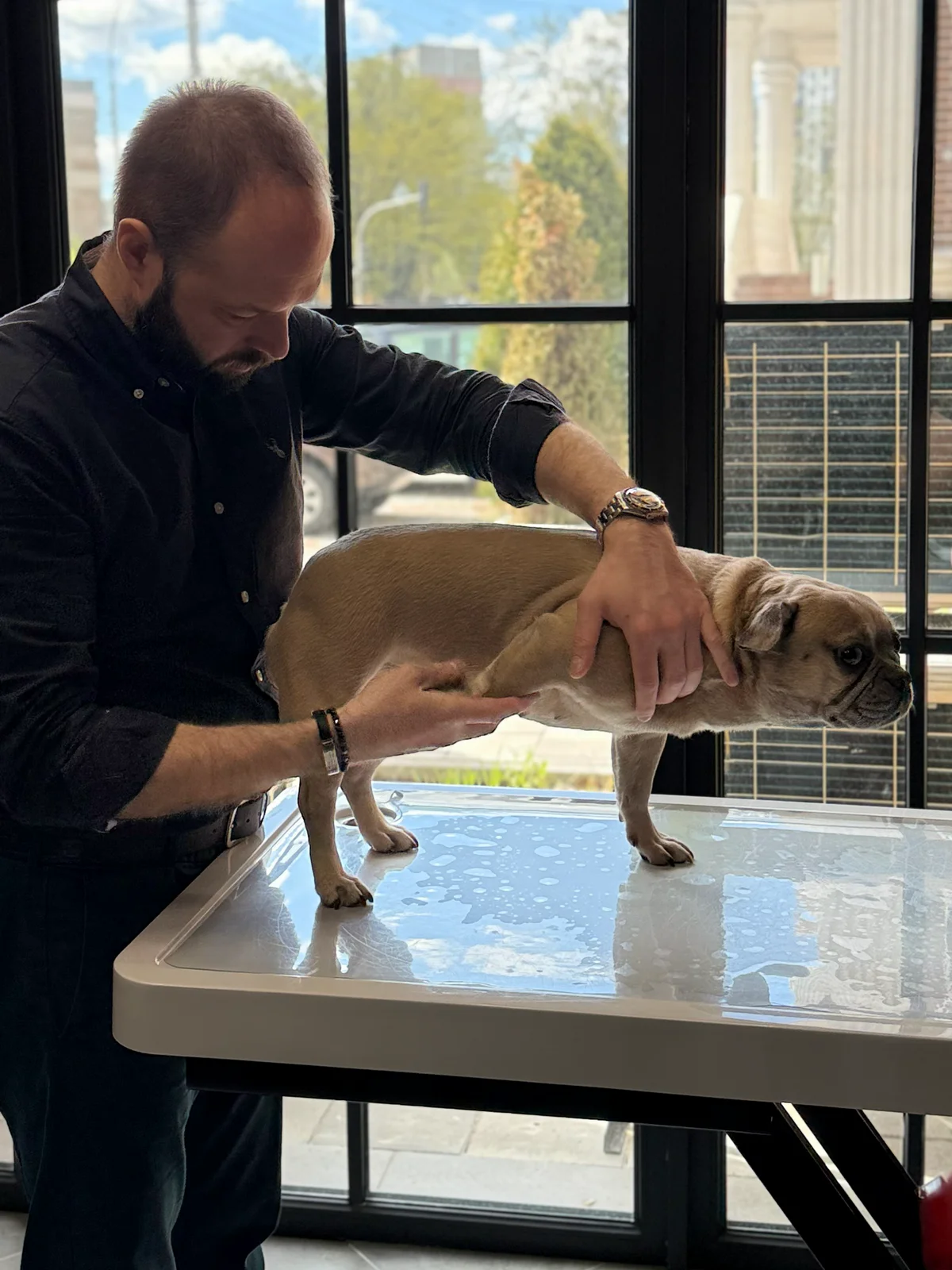
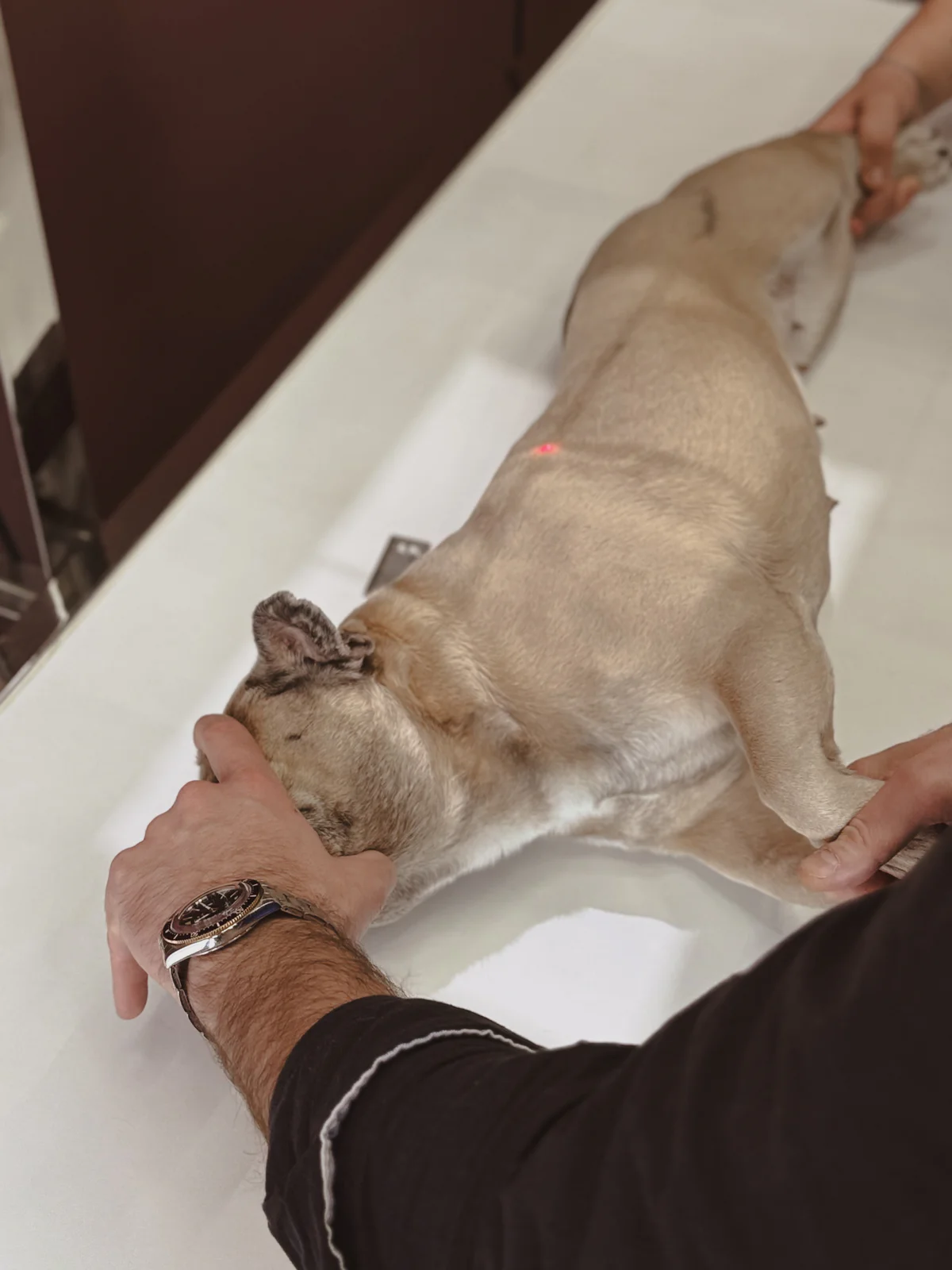
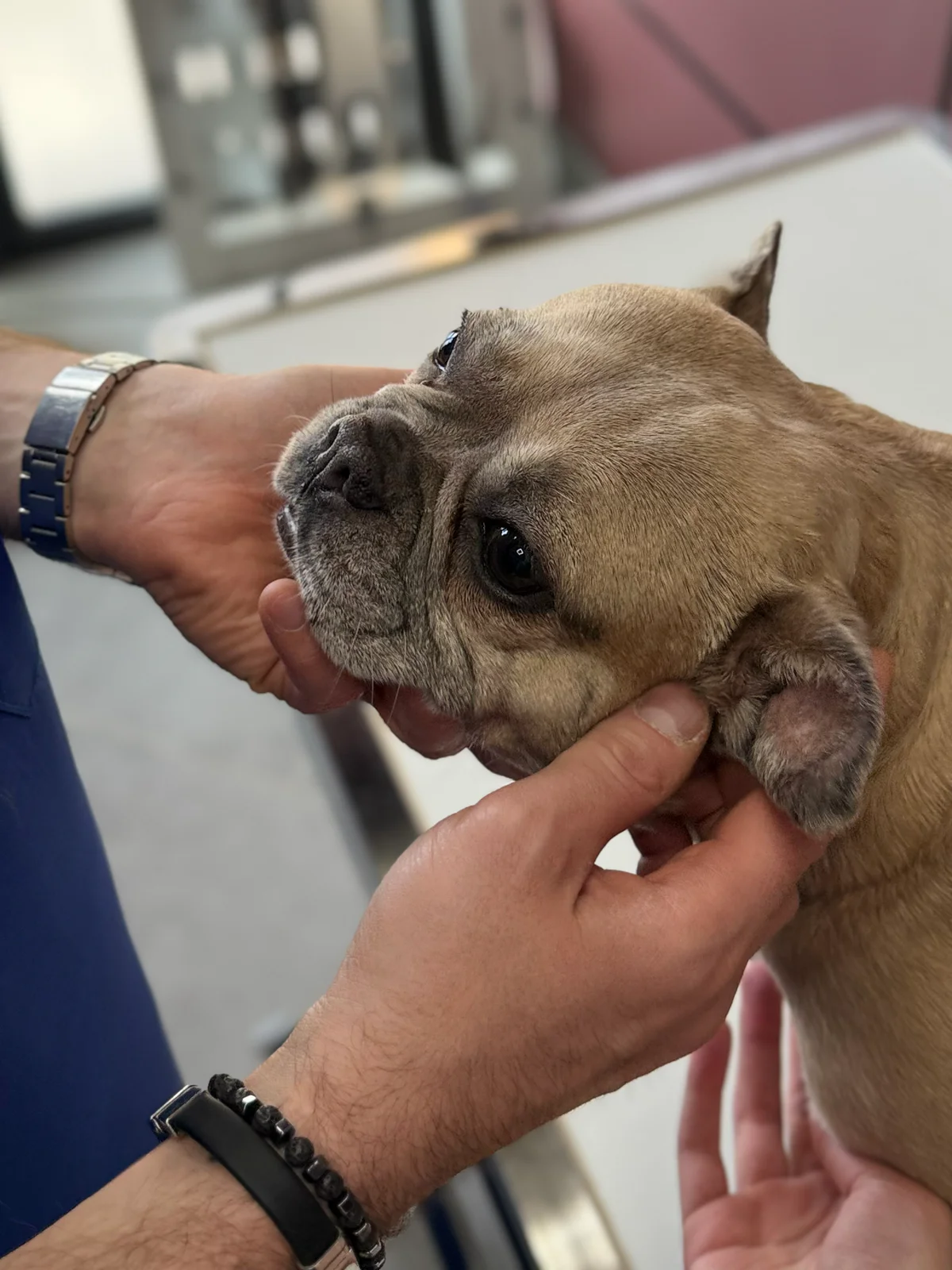
In case of open injuries, it is important not to fill the wound with aggressive solutions and not to apply tight bandages unnecessarily. If it is an open wound in an animal or a wound after a bite, the main thing is to protect the area from contamination and quickly get to the clinic. All this can be done in Kyiv at the Veterinary Hospital "Trinity".
Diagnostics in traumatology: when X-rays, ultrasound and additional examinations are needed
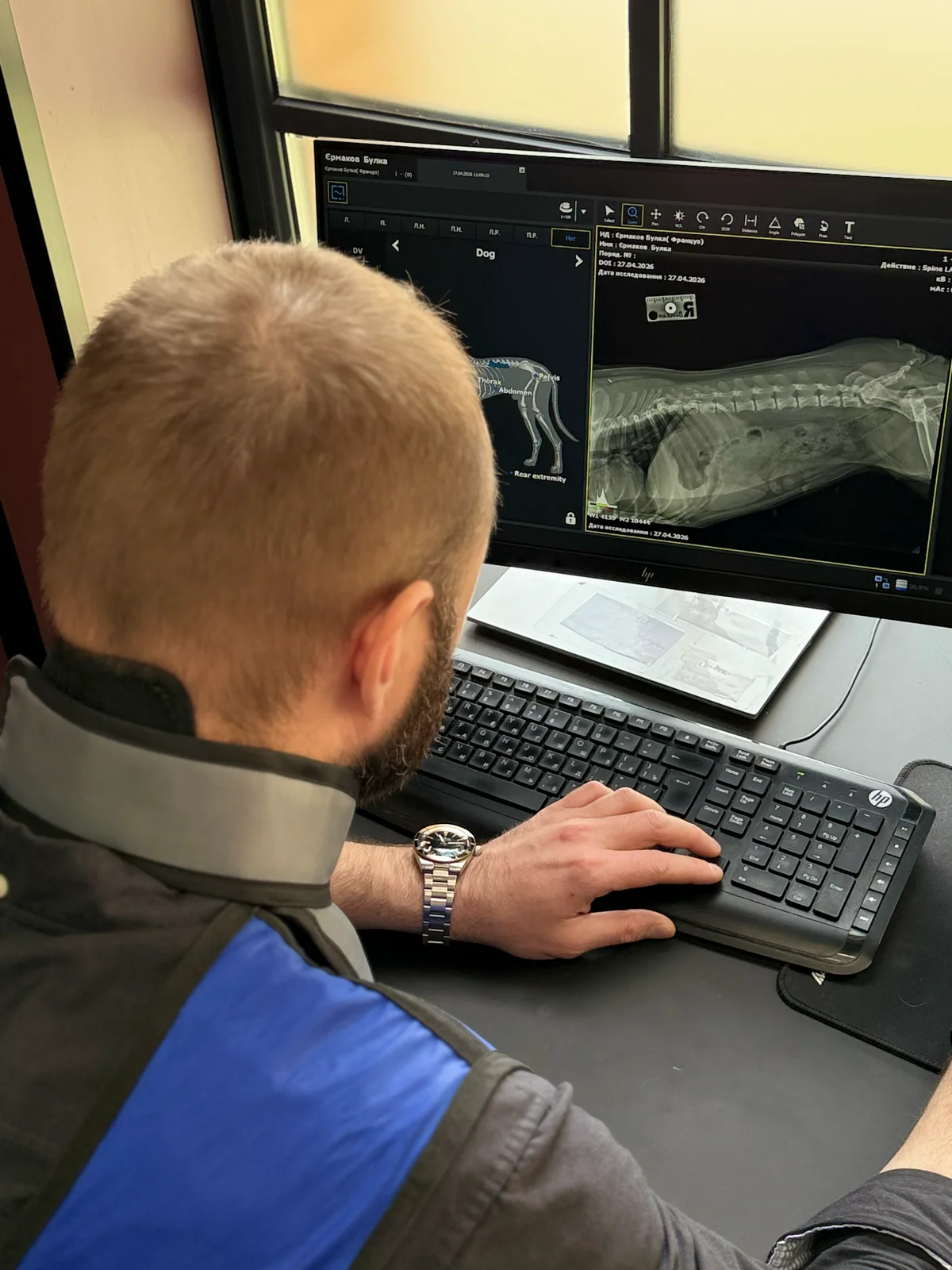
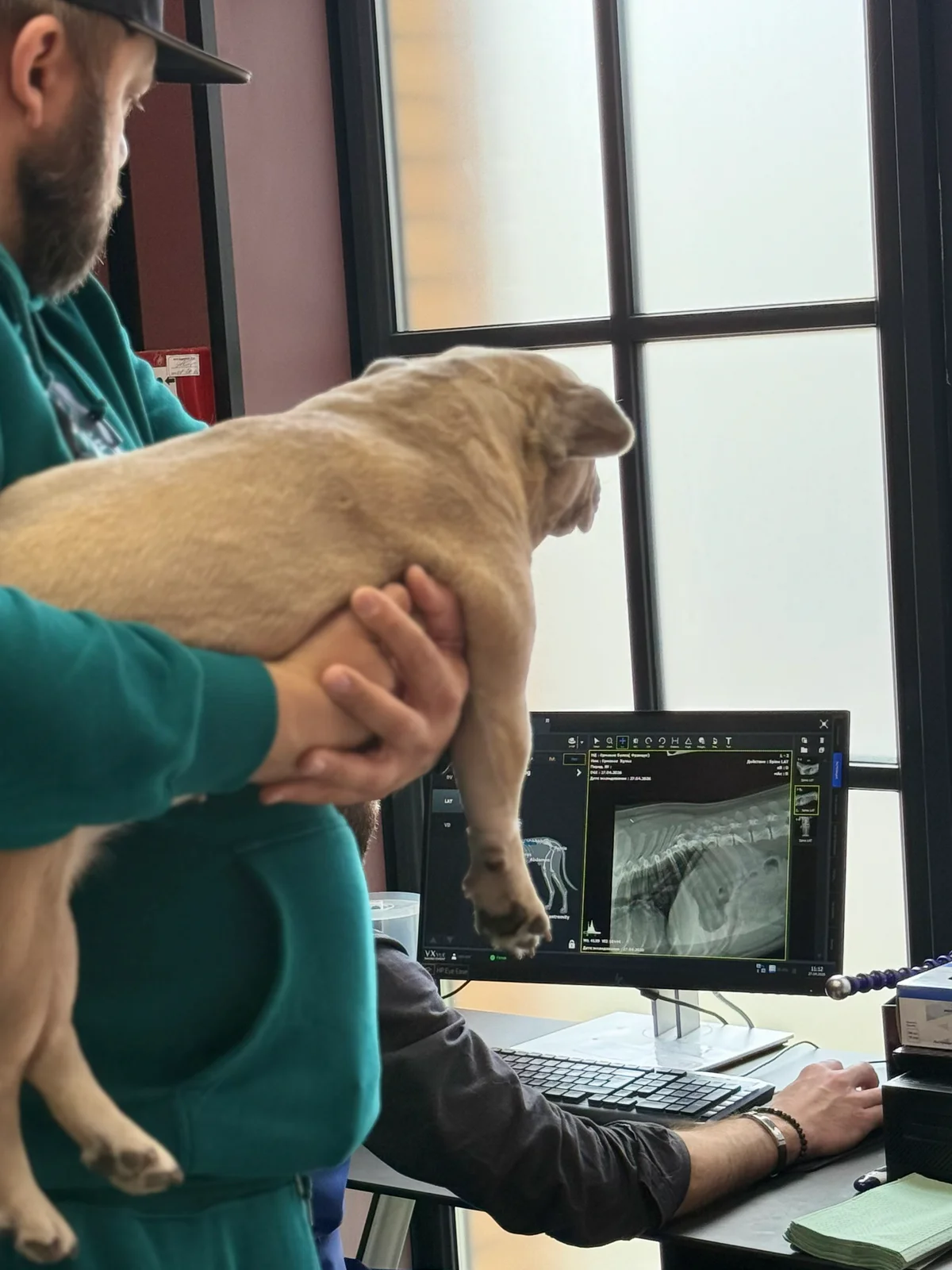
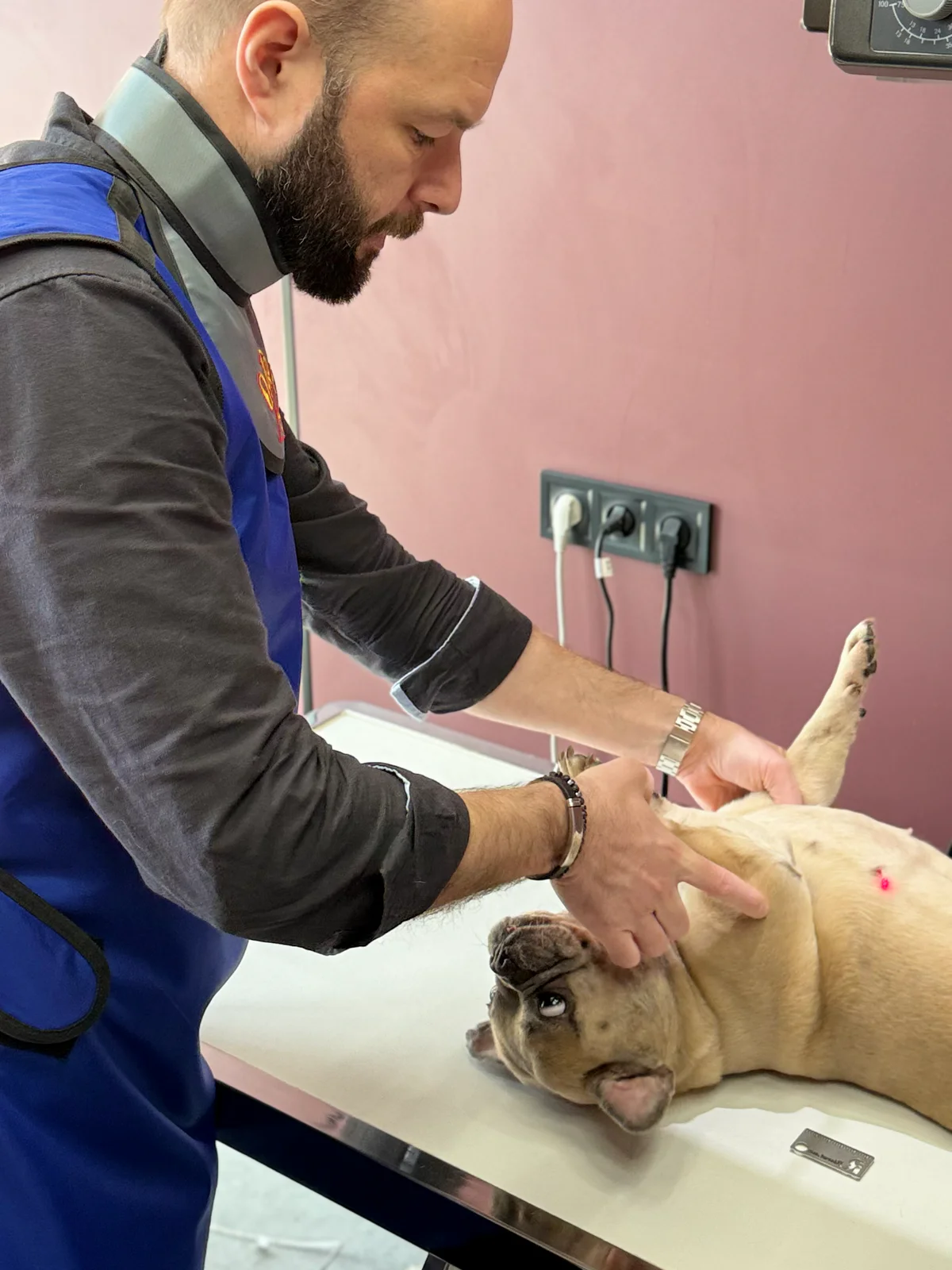
In traumatology, the right tactics begin with an accurate assessment of the injury. That is why when animals are suspected of fractures, dislocations, cracks or internal injuries, we use animal x-ray and, if necessary, Ultrasound in trauma. One method shows the condition of the skeletal system, the other helps to prevent fluid leakage, damage to soft tissues or internal organs.
Sometimes, on the outside, an injury looks «not serious,» but after a fall, the animal becomes lethargic, has difficulty breathing, or behaves unusually. It is at such moments that it is important not to postpone the diagnosis of injuries. Is it really just a bruise? Or are there hidden injuries? The answer is not an assumption, but an examination.
Osteosynthesis and Bone Fixation in Animals: How to Choose a Treatment Method
When it comes to a complex paw fracture in a dog or cat, unstable injuries, the doctor considers not only the fact of the fracture itself, but also its localization, type, displacement, age of the animal, weight and general condition. That is why osteosynthesis in dogs or cats is not selected according to a template. For each patient, the solution is different.
In some cases, precise fixation of bones in animals is required to restore the axis of the limb and allow the tissues to heal properly. In others, less invasive stabilization and subsequent monitoring are sufficient. The main goal is the same: not just «reassemble» the bone, but to restore movement and support without chronic pain.
Injuries after falls and road accidents: why rapid stabilization is important
An animal after a car accident or a severe fall may not only have obvious lameness. Sometimes the greatest danger is internal injuries, chest pain, bleeding or shock, which are not always visible at first glance. That is why when a dog or cat has a car accident, we assess the condition comprehensively, and do not focus only on one paw or one wound.
Rapid stabilization is no less important than subsequent surgery. First, doctors assess breathing, blood circulation, and pain level, and only then determine the order of examinations and interventions. This approach to traumatology allows you not to lose sight of the main thing - patient safety in the first hours after the injury.
Postoperative care and rehabilitation: how to restore movement to an animal without pain
Surgery is not the end of treatment, but only one of its stages. After fixing a fracture, treating a wound, or stabilizing a joint, the animal needs control, a calm regime, pain relief, and a gradual return to activity. That is why rehabilitation after a fracture in a dog or cat is of great importance for the final result.
We work to ensure that the animal's motor function recovery is consistent and safe. Check-ups, support assessment, activity recommendations, and collaboration with a rehabilitation specialist help shorten the recovery period and reduce the risk of recurring problems. After all, what is important to the owner? To see your pet get up, walk, and not be afraid of movement again.
How to make an appointment and prepare your animal for a traumatologist appointment and what to ask the administrator
Before the visit, it is useful to remember when exactly the injury occurred, how the animal behaved after it, whether the dog's paw was swollen, whether there was aggression from pain, whether there is support on the limb. If you have already taken pictures or given medications, be sure to tell the doctor about it. This helps to develop the right tactics faster.
If you need a consultation with a veterinary traumatologist, an appointment with a veterinary surgeon, or clarification of the examination route, please clarify the details with the administrator. At the Trinity clinic in Kyiv, we help organize an appointment so that the traumatologist for animals in Kyiv is available without unnecessary delays, and the assistance begins on time.