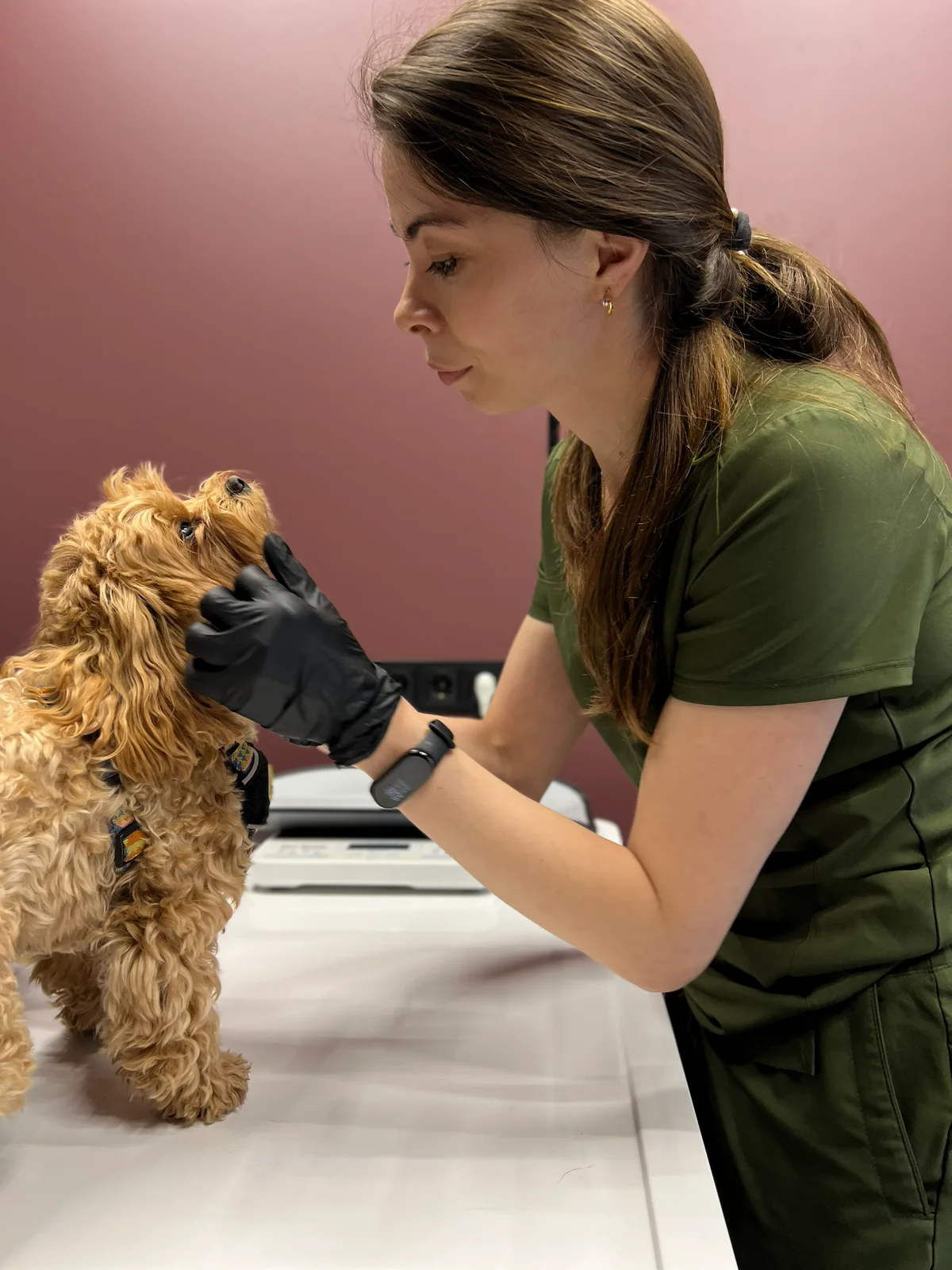
Areas of veterinary therapy: Acute conditions, Chronic diseases, Prevention
The directions cover both short acute conditions and long histories with monitoring in dynamics. In acute cases, the therapist stabilizes the condition, determines priorities and connects diagnostics when, for example, there is constipation, sudden changes in behavior or pain. In chronic processes, regular examinations, correction of the regimen and monitoring of the animal's condition according to specific indicators are important.
The preventive direction is also included in the therapy: preventive examination of the animal, check-up for animals and a comprehensive examination of the animal helps to notice problems earlier. This is especially important for adult and elderly pets, when symptoms may be "smoothed out" and the body reacts more slowly.
Diagnostics in therapy: what tests and examinations may be needed
The therapist prescribes tests not "just in case", but for a specific purpose. They often start with the laboratory: general blood test of the animal, animal blood biochemistry, animal urine analysis. This allows you to assess inflammation, dehydration, liver and kidney function and make treatment safer.
Visual methods are connected according to indications: Ultrasound for animals help see the organs and explain the cause of symptoms. If evaluation of bones, lungs, or trauma is needed, the therapist recommends X-ray. For cardiac risks and before procedures, an ECG for animals is important. Sometimes endoscopy is needed - when you need to see the problem from the inside and determine the tactics more precisely.
Monitoring treatment in dynamics: repeat visits, plan correction, observation
Therapy is not a «one-time-use-and-forget-it» approach. We plan follow-ups to assess response to treatment, adjust dosage, or change regimen if symptoms return. This is important for both acute conditions and chronic animal disease management, where stability and regularity are needed.
A follow-up visit helps to assess whether the increased thirst has decreased, whether the well-being has returned to normal, and whether signs of dehydration have disappeared. We explain to the owner which changes are normal and which require immediate attention.
When the therapist refers to a narrow specialist: Cardiologist, Dermatologist, Gastroenterologist, Ophthalmologist
The therapist coordinates the route and connects specialized areas when it really enhances the result. If there is suspicion of heart problems or if control is needed before treatment, he is involved cardiologist for animals. For long-term itching and rashes, you need dermatologist. If gastrointestinal symptoms recur, your doctor may recommend a gastroenterologist. If redness, discharge, or pain in the eyes occurs, you may need to see a doctor. ophthalmologist for animals.
This approach is convenient because the therapist does not "give away" the patient, but remains a coordinator: he coordinates the results, assembles the picture into a single whole, and maintains a clear plan.
How to make an appointment with a therapist at TRINITY: what to ask the administrator
To get an appointment with a therapist, it is enough to describe the symptoms and duration of the problem, indicate the age and breed. If you are interested in the cost of a therapist's appointment or how much a veterinarian's consultation costs, the administrator will guide you through the format of the visit and organizational aspects, please clarify the details with the administrator.
Also, when making an appointment, it is worth clarifying whether preparation for tests or ultrasound is required, and what documents or results to bring with you. We will do everything to make veterinary therapy at TRINITY understandable, calm and as effective as possible.