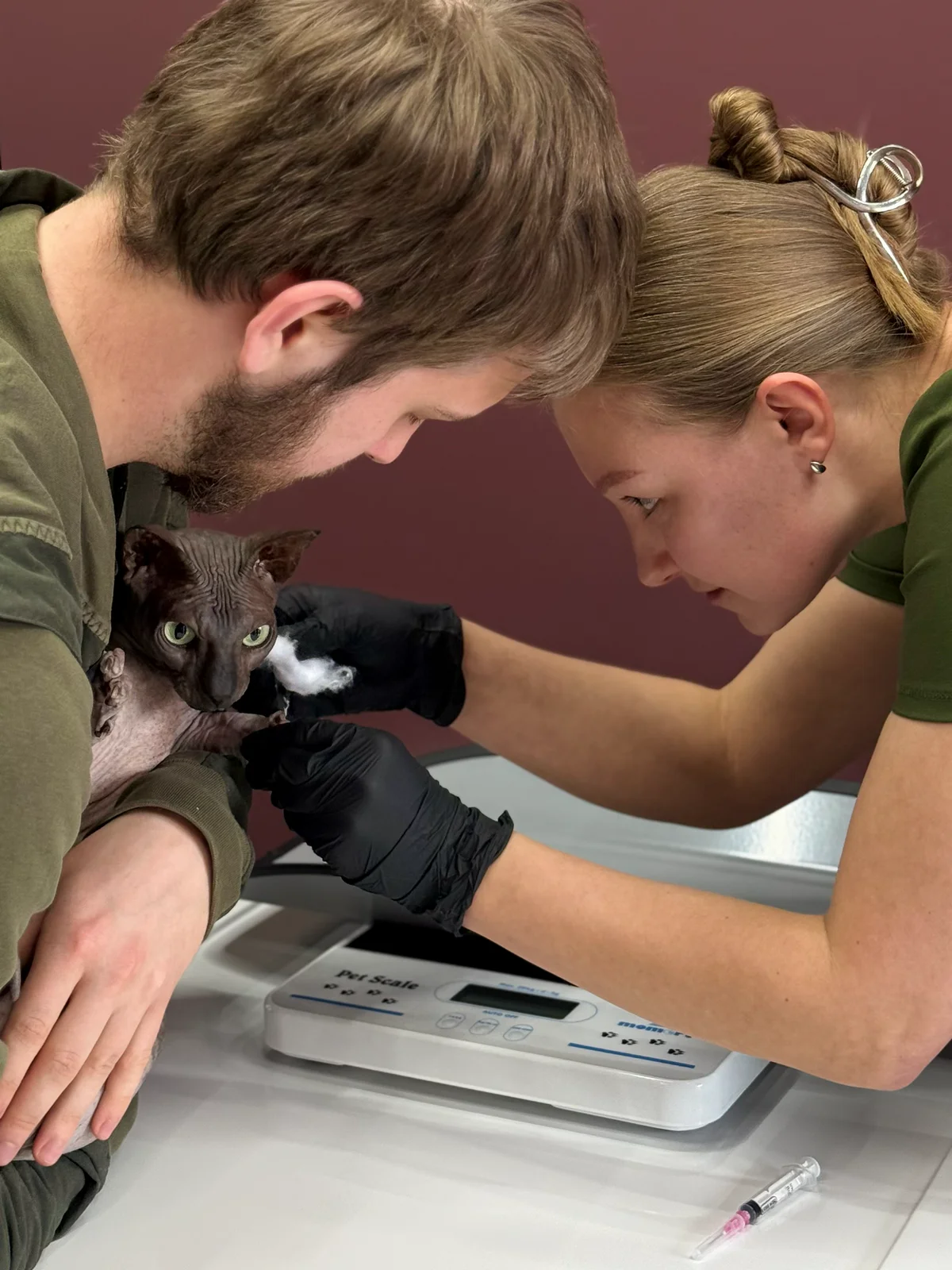
Why is it important not to treat it haphazardly? Because one and the same ointment does not solve different causes. At the Trinity clinic in Kyiv, we strive not only to relieve itching, but to understand why it appeared, and only then to build a therapy plan.
Parasitic, fungal and bacterial skin lesions: why it is important to find the exact cause
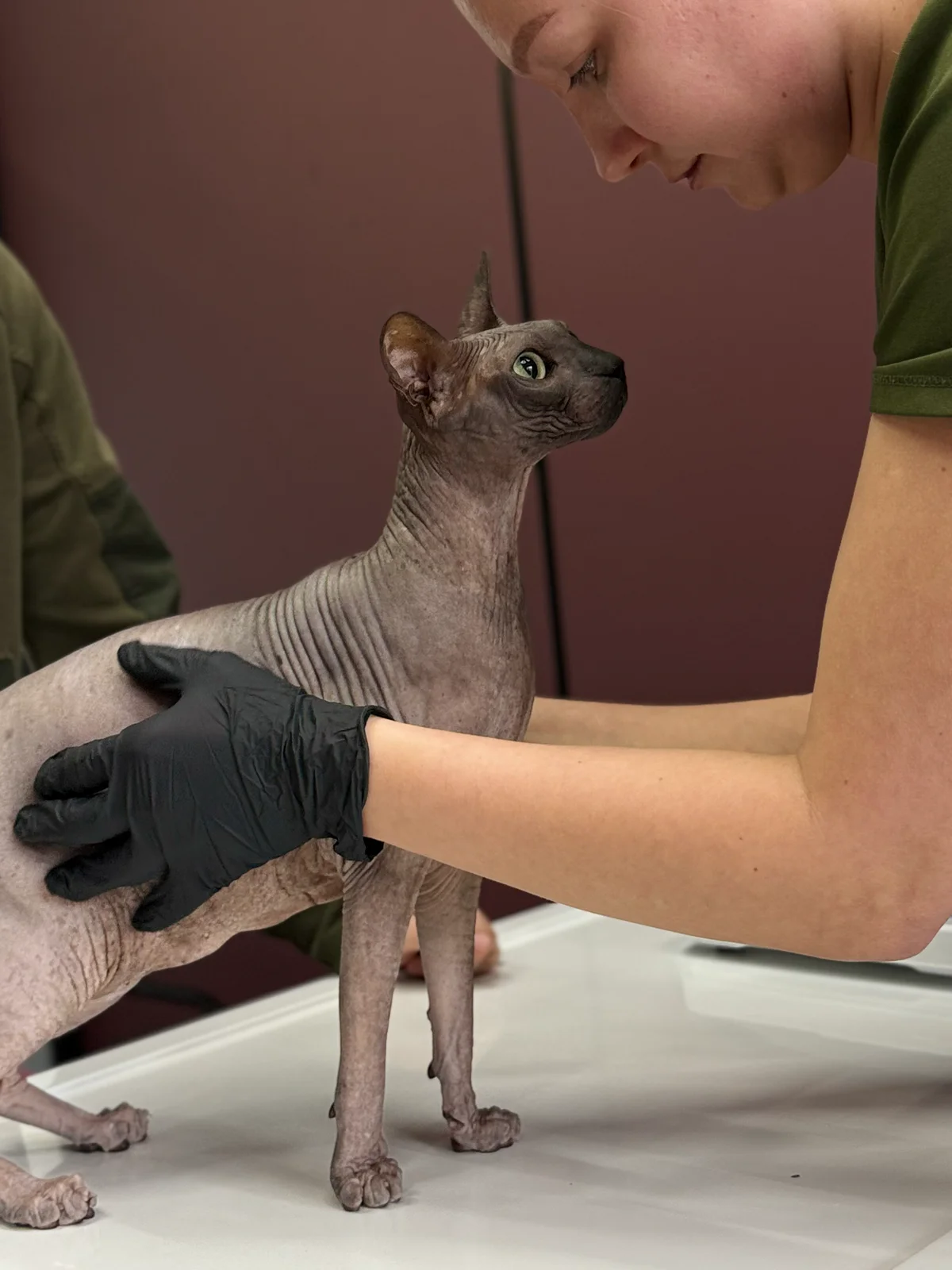
Skin parasites, fungus in dogs, bacterial dermatitis or mixed infections often look similar. The owner sees spots, flaking, an unpleasant odor, baldness or constant scratching, but the cause can be completely different. That's why diagnosis of skin diseases in animals needs confirmation, not assumptions.
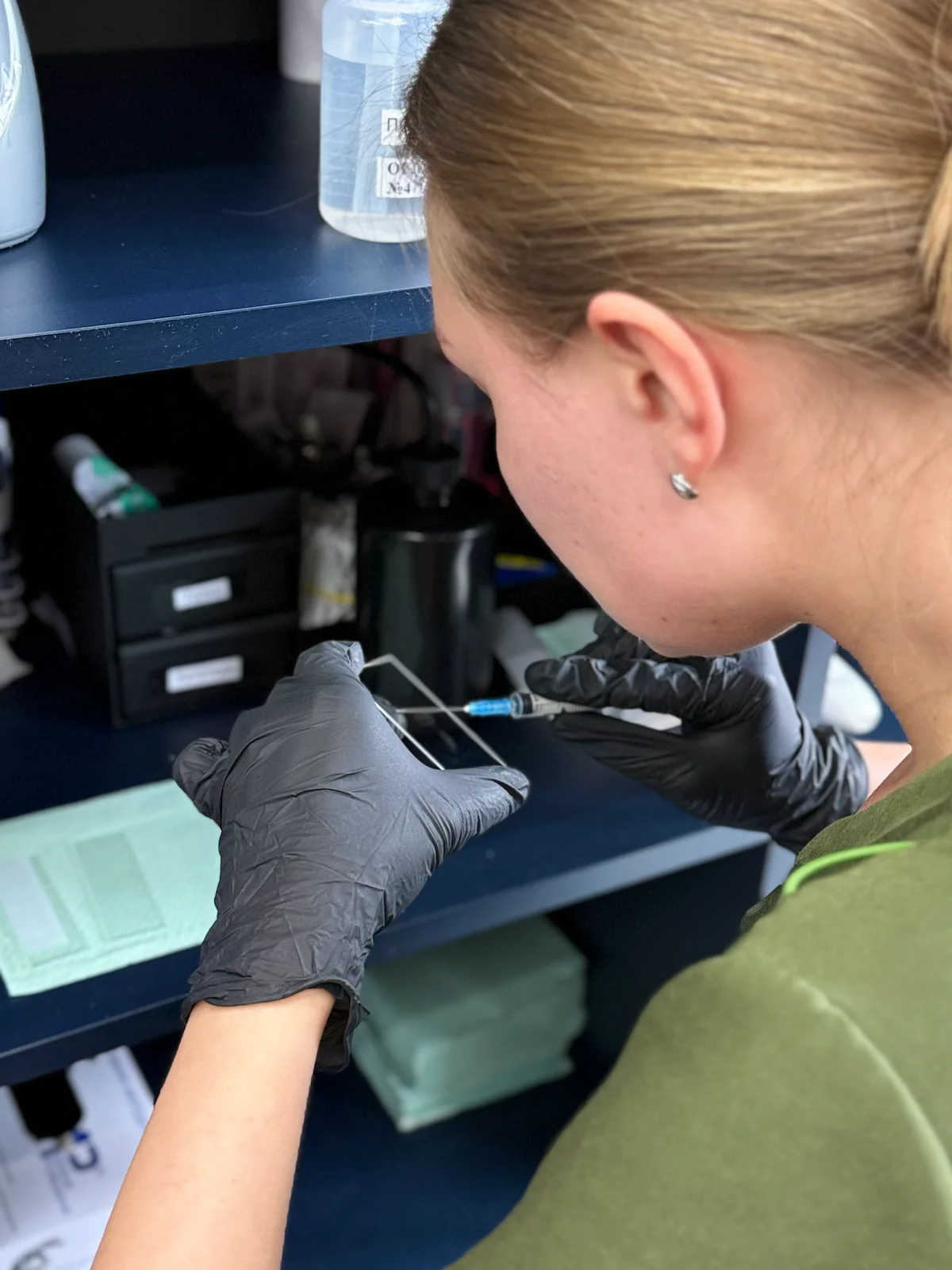
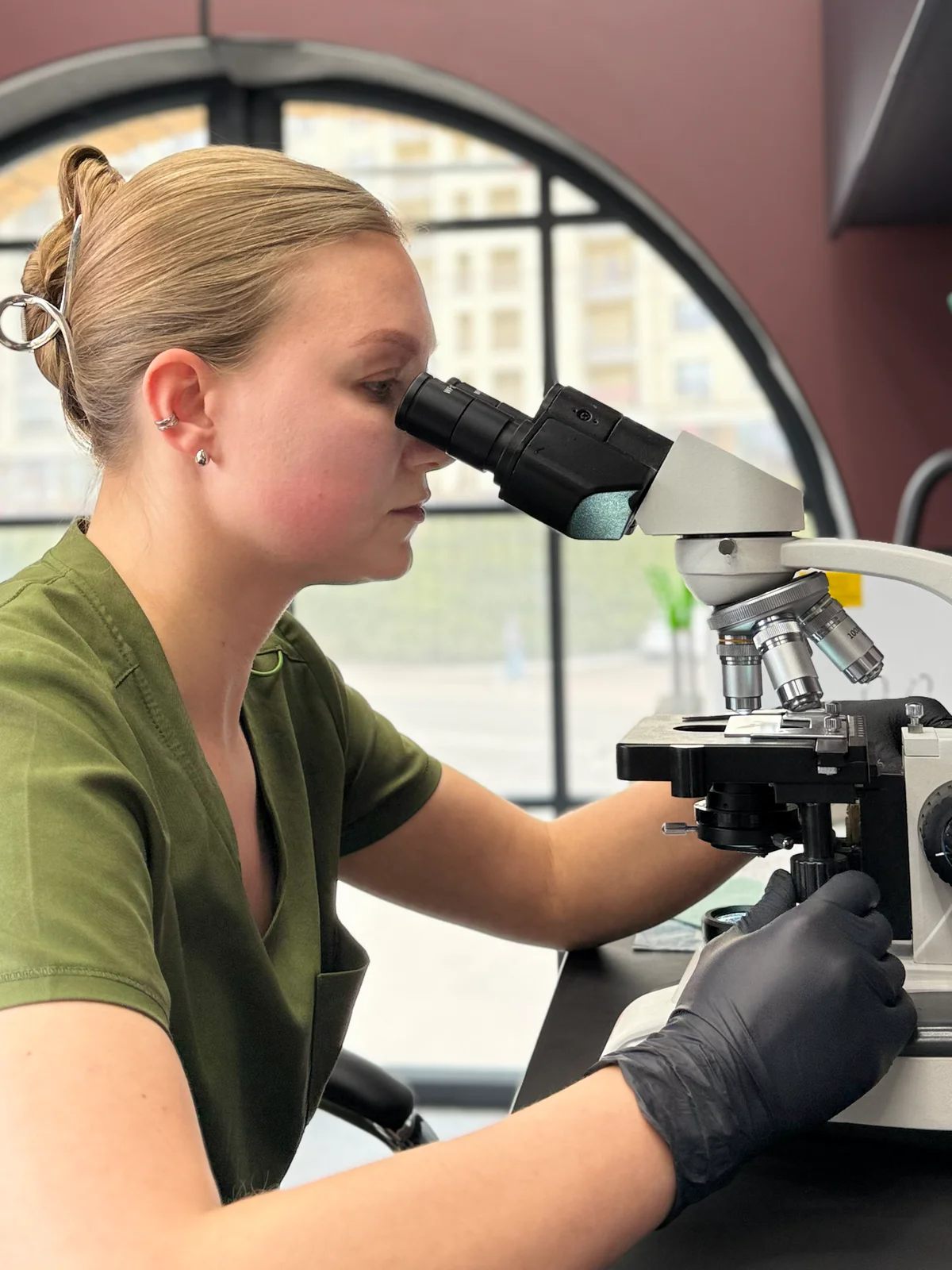
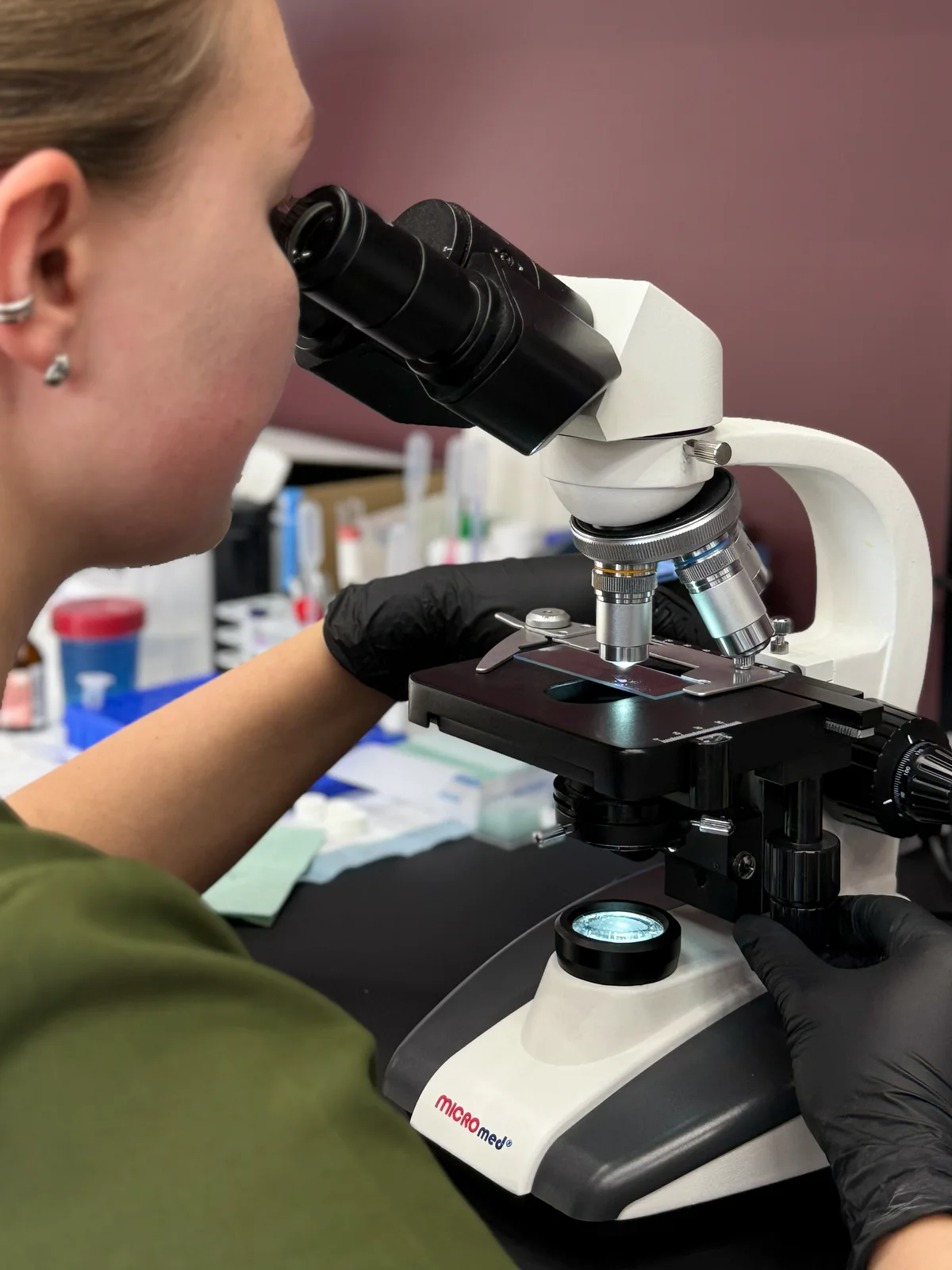
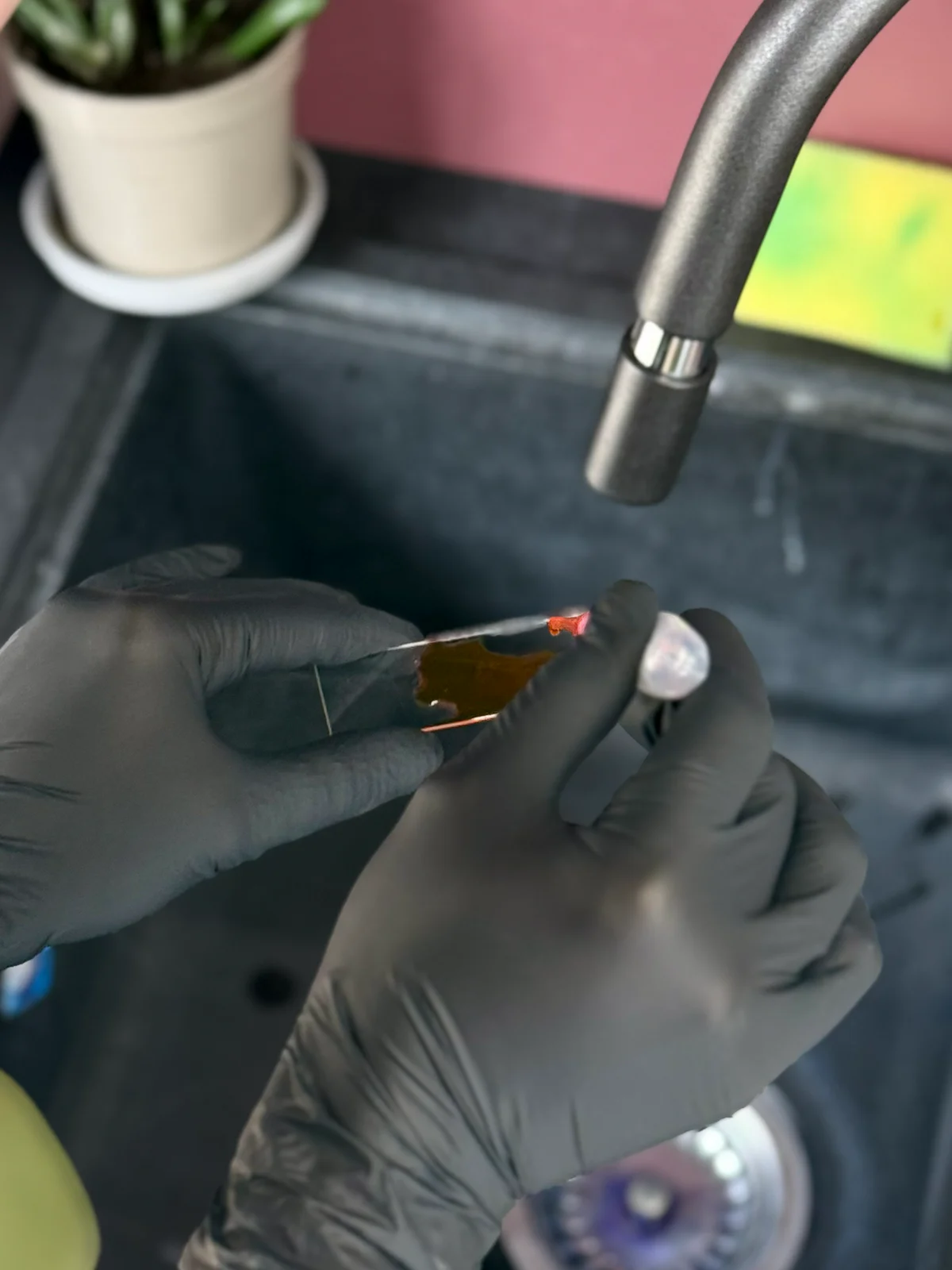
For example, demodicosis in dogs, dermatophytosis in cats, malassezia or pyoderma are treated differently. If you start therapy without a clear answer, the symptoms may subside only for a while, and then return again. That is why we are so careful with scrapings, cytology and cultures.
Otitis, pododermatitis and paw skin lesions: how are these problems related?
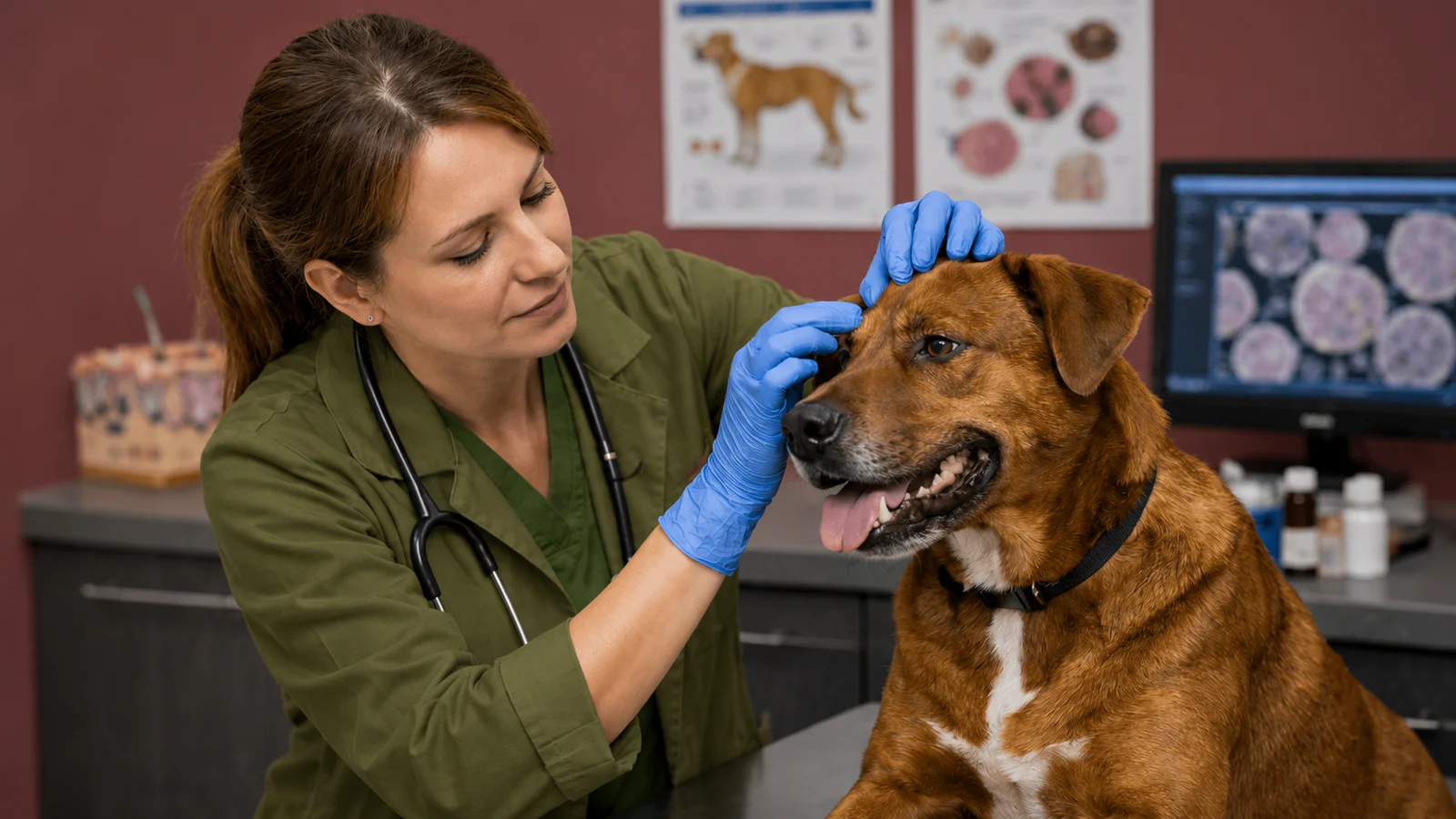
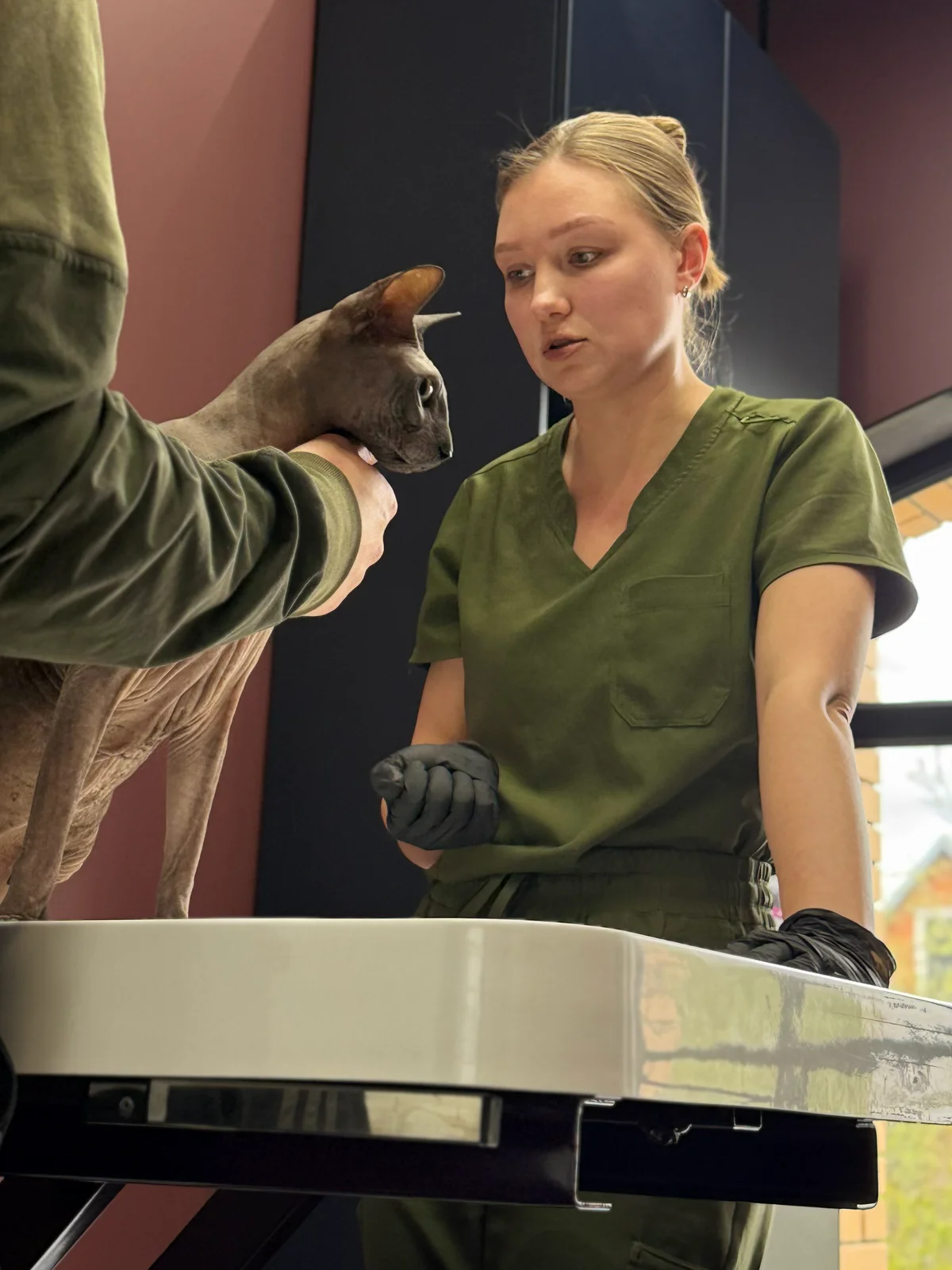
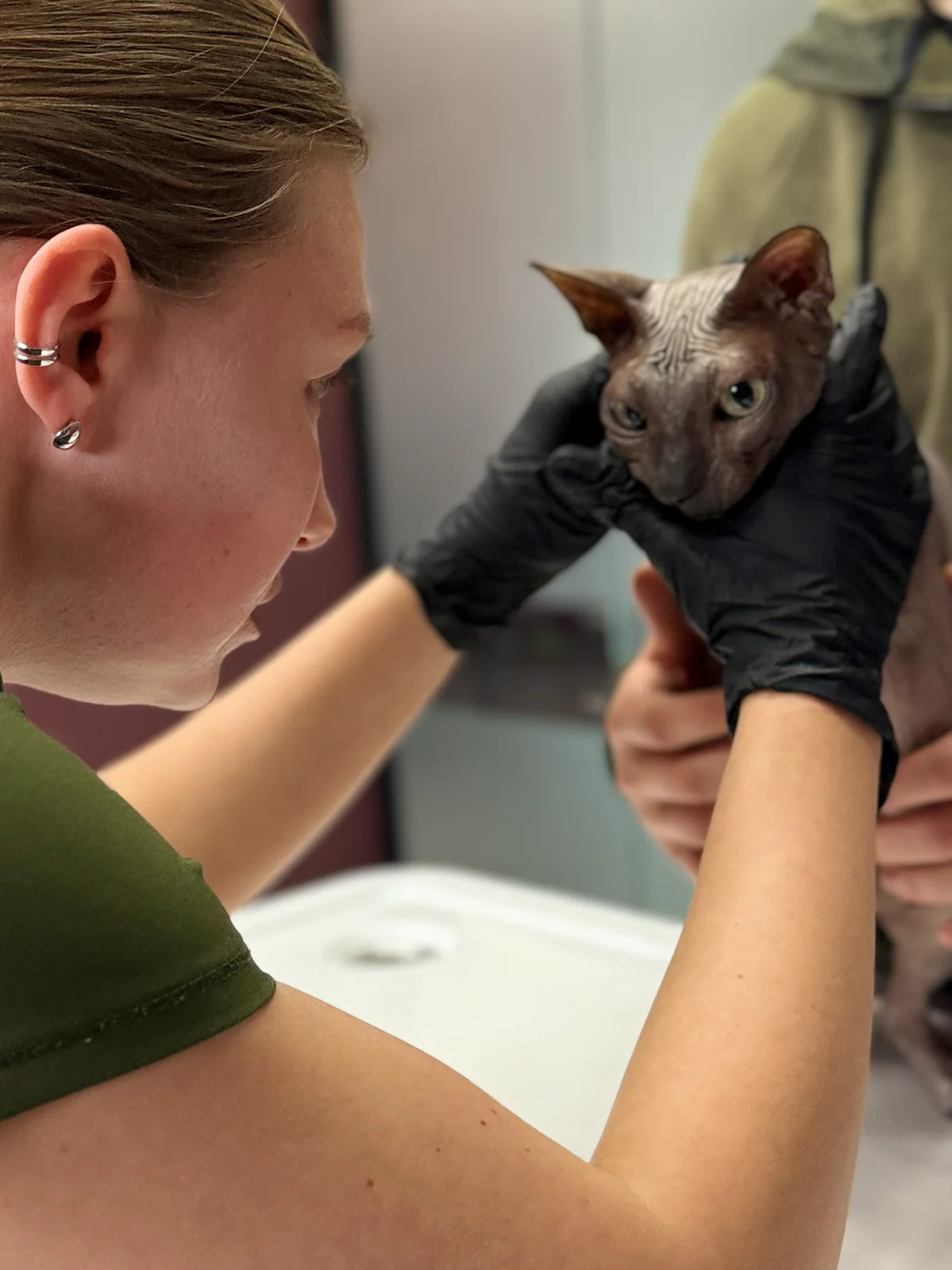
When a dog shakes its head, has discharge from its ears, or constantly licks its paws, the problem is not always local. Often, otitis media in dogs, pododermatitis, and skin irritation are part of the same process, such as an allergic or infectious one. That is why a dermatologist looks at the animal holistically, not just at one area.
Redness between the toes, an unpleasant odor, sore paw skin, or repeated ear infections are signals that should not be ignored. The longer the problem persists, the higher the risk of chronicity and frequent relapses.
How to prepare your pet for a dermatologist appointment: what not to do before the visit
Before the consultation, it is important not to randomly treat the skin with new products unless this has been agreed with the doctor. If the animal has skin redness, hair loss, or suspected infection, excessive use of shampoos, ointments, or antiseptics can change the picture and complicate the diagnosis.
It is good if the owner remembers when the symptoms started, what the animal is fed, whether there were seasonal exacerbations, contact with other animals, parasite treatments, and previous treatment. This way, the consultation with a dermatologist for animals becomes much more accurate from the first visit.
Why scraping, cytology, cultures and biopsy are needed for skin diseases
Many owners ask: why so many tests if the rash is already visible? The thing is that the skin reacts similarly to very different problems. That is why skin cytology in animals, fungal culture, bacterial culture of the skin or skin biopsy in an animal help to distinguish allergy from infection, parasitic damage from an autoimmune process, and superficial inflammation from a deeper problem.
This is not superfluous. tests, but the path to accurate treatment. When the cause is confirmed, we do not waste time guessing and do not prescribe therapy «just in case.» This approach helps reduce the risk of repeated exacerbations.
Individual treatment plan and relapse control: why dermatology needs dynamic monitoring
In dermatology, there is rarely a magic solution in one day. Treating skin diseases in animals often requires time, monitoring and correction of therapy. This is especially true for chronic allergies, recurrent otitis, seborrhea in dogs or conditions where symptoms depend on several causes at the same time.
That is why we create an individual therapy protocol for the animal and monitor the dynamics. For the owner, this means a simple thing: we do not just give a prescription, but accompany the treatment so that the control of skin disease recurrences is real, not formal.
How to make an appointment with a dermatologist at Trinity: organizational details and consultation
To get an appointment with a veterinary dermatologist, it is enough to briefly describe the symptoms: itching, licking, spots, rash, problems with ears, paws or fur. This will help the administrator determine whether a veterinary dermatologist is needed and what it is advisable to bring with you to the consultation.
If you are interested in the cost of a dermatologist for animals, the price of an initial visit or examinations, please clarify the details with the administrator. At the Trinity clinic in Kyiv, we organize the treatment so that dermatology for animals in Kyiv is understandable, consistent and truly useful for your pet.