How to prepare an animal for a consultation with an oncologist: what is important to bring to the appointment
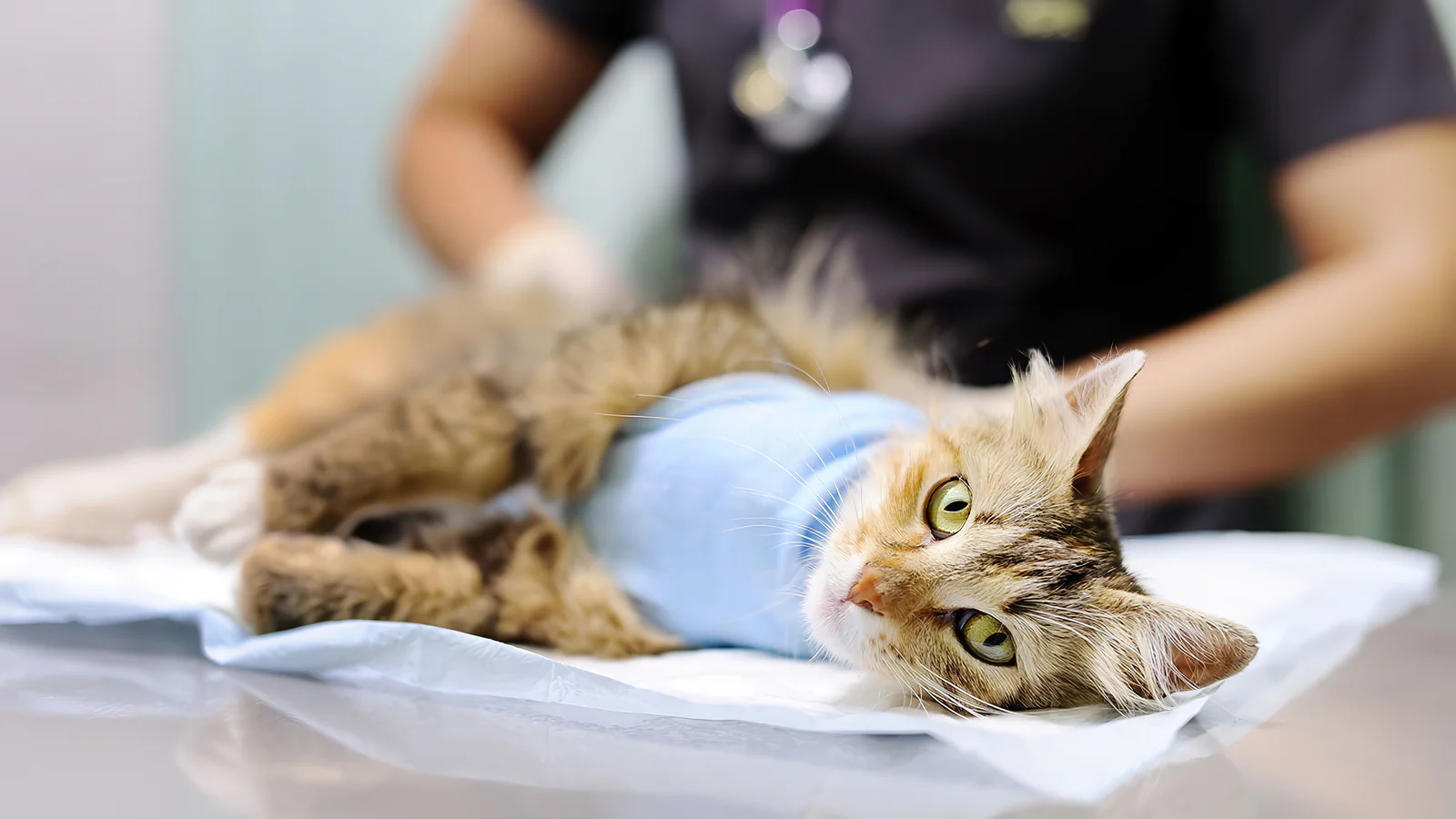
During the first visit, it is important not only to show the formation, but also to give the doctor as much useful information as possible. If you notice that your dog or cat has a lump, a seal under the skin, or a wound that does not heal, it is useful to remember when it appeared, whether the size has changed, whether there is pain, discharge, or a change in the color of the tissues. If you have already had an examination, take all the results with you.
During the appointment, the doctor assesses not only the tumor itself, but also the patient's general condition. That is why for an oncologist's consultation, previous tests, images, discharge statements, a list of medications, and a brief history of changes in appetite, weight, and behavior are important. This approach helps to quickly move from suspicion of a tumor in a dog or cat to a well-founded plan of action.
Preoperative diagnostics in oncological surgery: cytology, histology, ultrasound, X-ray, CT scan
Before recommending surgical treatment of tumors in animals, we need to understand what type of formation we are dealing with. This is done by cytology and biopsy of the tumor in animals, and after removal, histology of the tumor in animals. It is these stages that help determine the nature of the process, the degree of aggressiveness, and the need for additional observation or therapy.
In addition to local assessment, staging is also important. At Trinity Clinic in Kyiv, we use Ultrasound for a tumor in an animal, X-ray and other methods if there is suspicion of metastases or it is necessary to understand the boundaries of the process. Thus, the diagnosis of tumors in animals becomes a real support for the decision, and not a formality before surgery.
Surgical removal of a neoplasm: how to choose the scope of the operation and treatment tactics
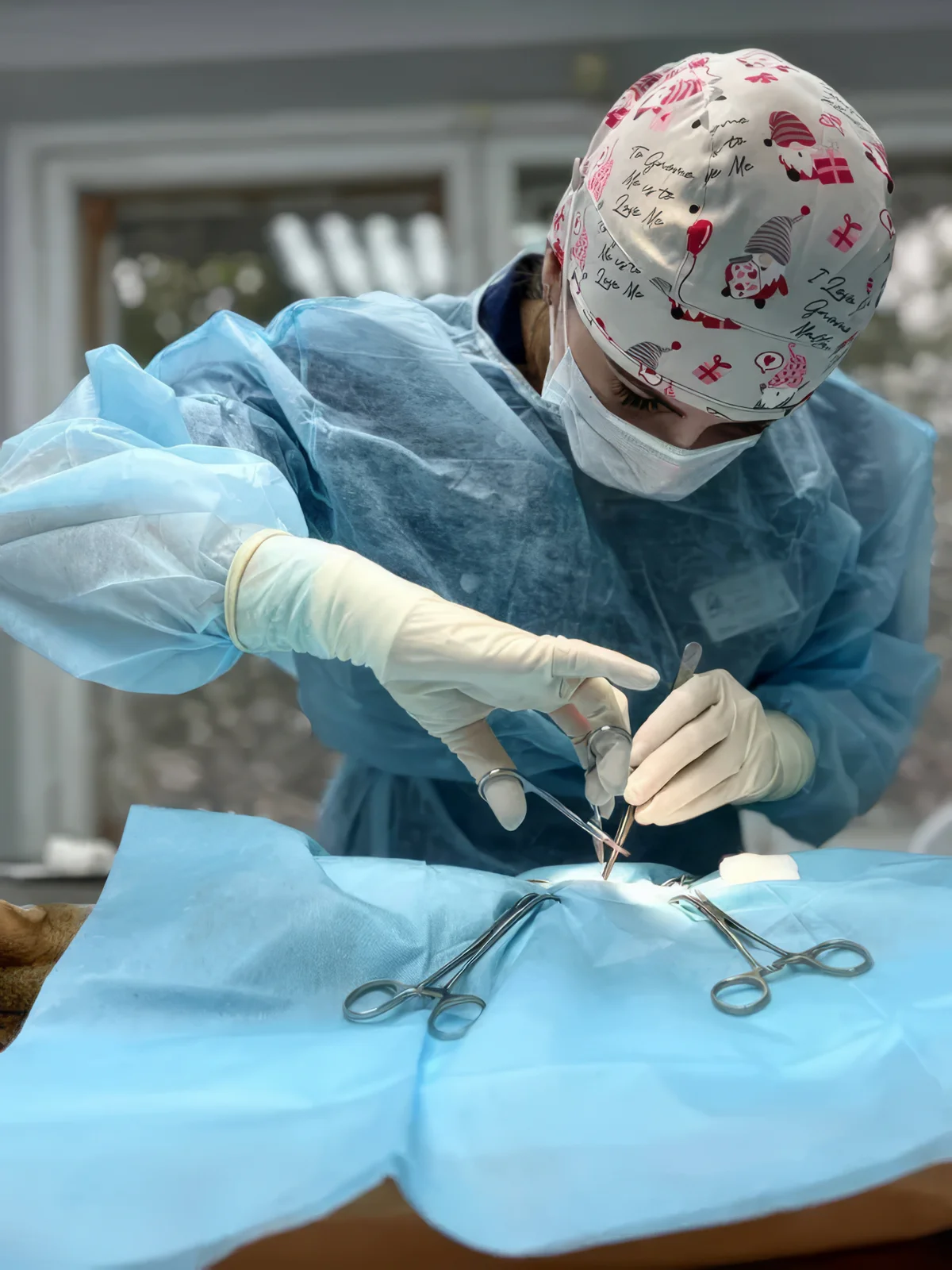
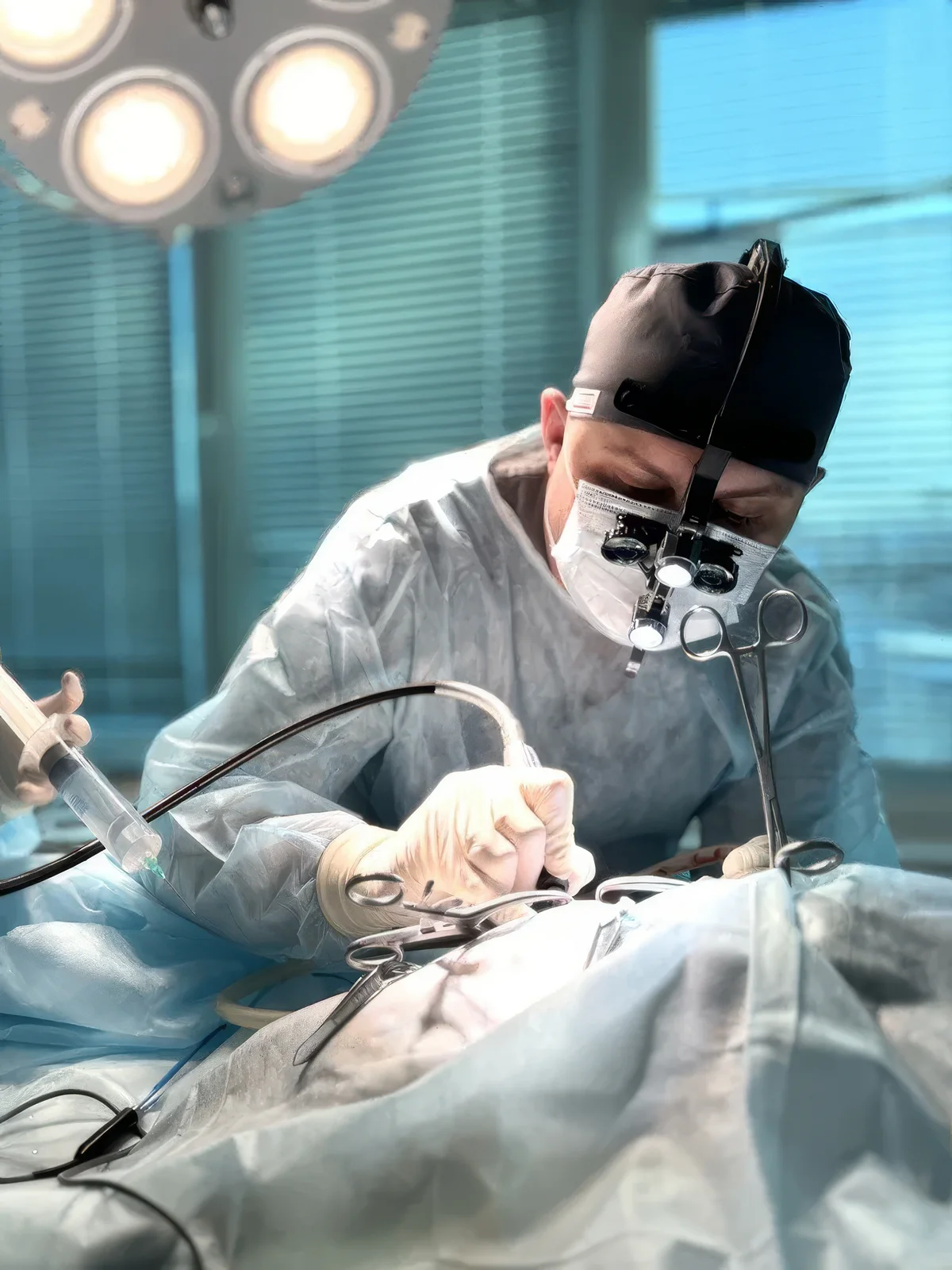
Oncological surgery does not work on the principle of "cut everything the same". If we see a neoplasm in a dog or cat, it is important to assess its localization, depth, connection with neighboring tissues, the risk of recurrence and the general condition of the patient. That is why the removal of a neoplasm in an animal can vary in scope: from local excision to a more complex intervention with a reconstructive stage.
In some cases, it is a question of removing a tumor from a dog or cat as the main method of treatment. In others, the operation is part of a larger plan, where preoperative preparation, control of the resection margins and subsequent observation are important. We explain these decisions in human language, without unnecessary drama, but honestly and to the point.
Oncosurgery for tumors of the skin, mammary glands, soft tissues and internal organs
Most often, owners turn to us because of formations on the skin or subcutaneous nodules. These can be lipomas, mastocytomas in dogs, sarcomas and other changes that require not only an examination, but also accurate morphological confirmation. A separate major area is mammary gland tumors in dogs or cats, where it is important not to delay the visit and assess the scope of surgery in a timely manner.
We also work with more complex cases when a dog has a suspected spleen tumor, liver, intestinal or soft tissue damage. In such situations, oncosurgery for animals requires particularly precise planning, because it is necessary not only to remove the tumor, but also to preserve the functionality of the body as much as possible.
Postoperative care, pain control and histological conclusion
After surgery, treatment does not end. On the contrary, the first days after the intervention are often crucial. We provide post-operative pain control in the animal, monitor the general condition, appetite, wound healing and give clear recommendations for home care. This is how postoperative care after tumor removal becomes part of the safe route, and not an «as needed» addition.
Next, it is important to wait for the histological conclusion, which helps to assess the type of tumor, the degree of aggressiveness, and the cleanliness of the removal margins. Further decisions depend on this: is observation sufficient, is a repeat examination needed earlier, or is there a risk that an additional stage of treatment is needed.
Relapse control, follow-up and repeat examinations
Even after a successful operation, the patient should not simply «disappear from the route». Monitoring of tumor recurrence in the animal is necessary in order not to miss regrowth, new formations or systemic changes. That is why we plan repeated examinations, assess the scar, general condition and, if necessary, connect ultrasound, X-ray or laboratory tests.
This approach is especially important for older patients and for those cases where there were aggressive forms of tumors. Regular monitoring does not mean that «all is well.» It means that we keep the situation under control and do not wait for the problem to become apparent again.
Palliative care and quality of life support for complex cancer diagnoses
Not all cases of oncology are reduced to radical removal. Sometimes the main task is not to fight aggressively at all costs, but to stabilize the condition, reduce pain and maintain comfort. This is precisely why palliative surgery for animals or other solutions aimed at maintaining quality of life exist.
We honestly talk to the owner about the goal of each stage. If a complete cure is not possible, this does not mean that there is no point in helping. On the contrary, properly organized support can give the animal peace, appetite, movement and time without suffering. For us, this is as important a part of oncological care as the surgery itself.
How to make an appointment with an oncologist at Trinity: organizational details and consultation
To get an appointment with an oncologist or a consultation with an onco-surgeon for animals, it is enough to briefly describe the problem: where exactly the formation is located, how long ago it appeared, whether it is growing, whether there are changes in appetite, weight and well-being. This will help you understand more quickly what format of the visit is needed and what examinations may be needed first.
If you are interested in the cost of oncological surgery for animals, the price of tumor removal in a dog or cat, please check with the administrator for details. At the Trinity clinic in Kyiv, we help organize an appointment so that oncological surgery for animals does not begin with chaos, but with a clear, calm and professional route.